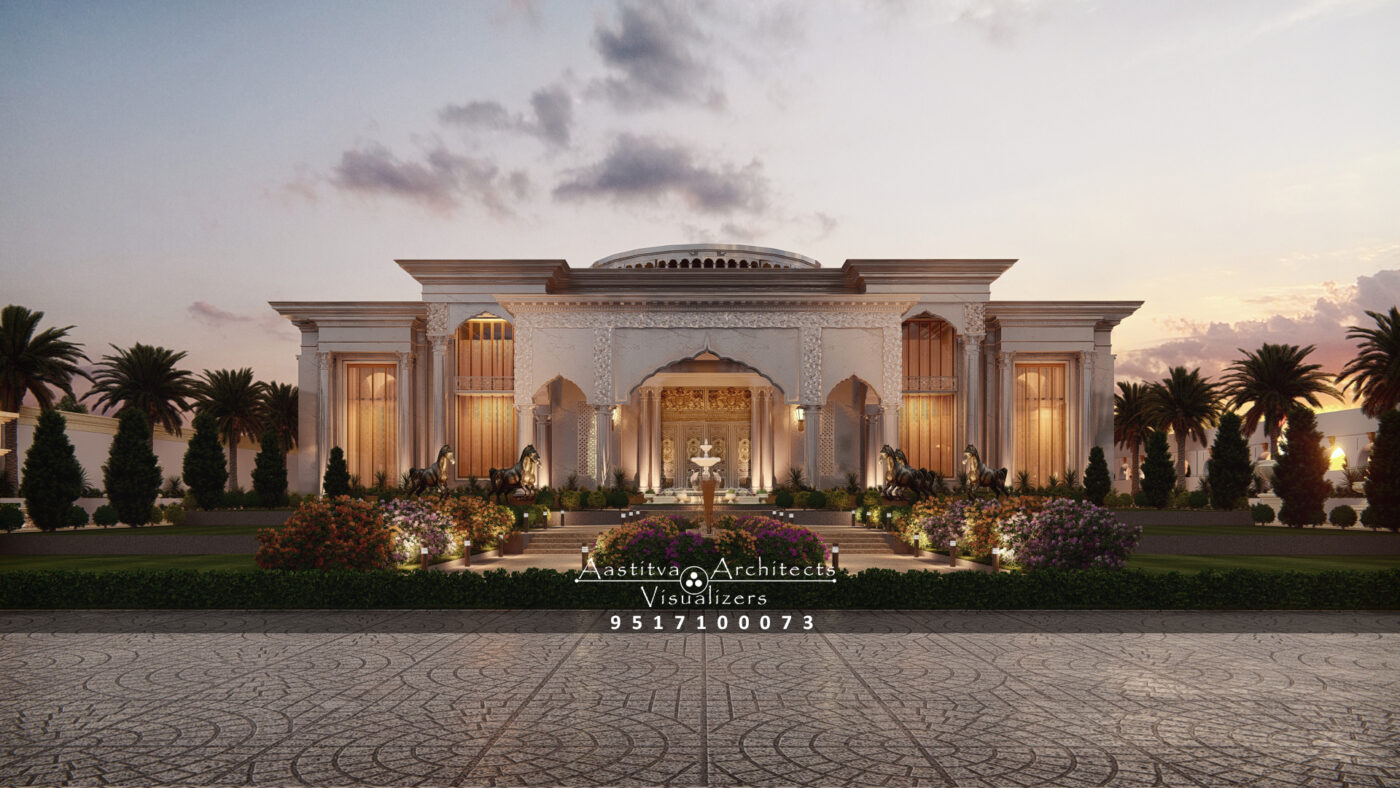
Category: Architectural Visualization | Target: Real Estate Developers, Builders, Brokers | Read time: ~8 minutes
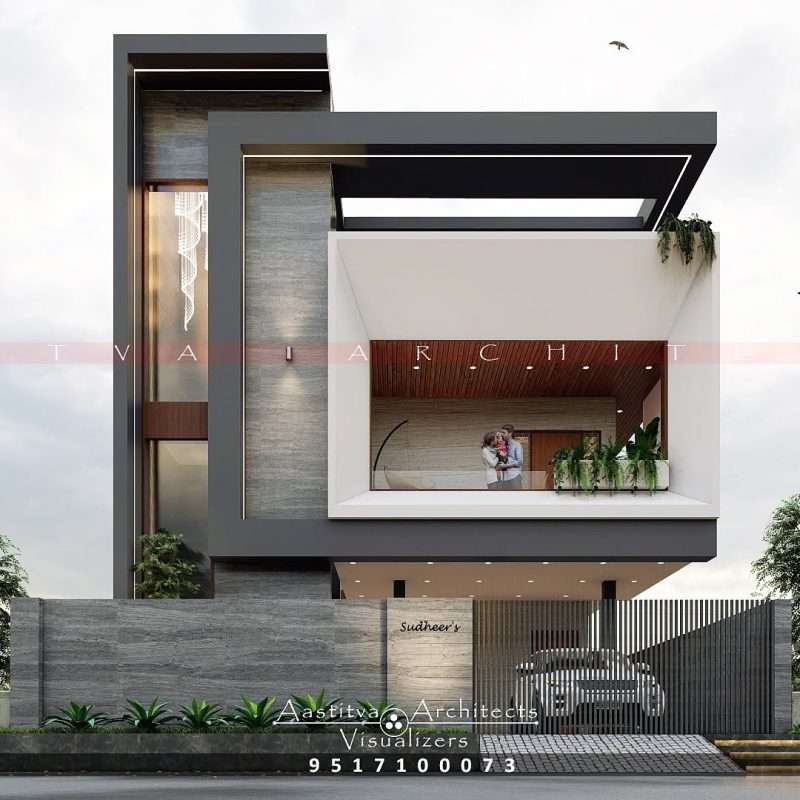
Imagine you are a buyer. A developer shows you a floor plan drawn in black ink, a few site photographs of a muddy construction plot, and a brochure with vague artist impressions. Then another developer hands you a photorealistic image — morning light breaking across the facade, trees casting shadows on the driveway, the entrance lobby rendered so sharply you can almost feel the marble underfoot. Which project gets your deposit?
The answer is obvious. And yet, across India, thousands of residential and commercial projects are still being marketed without professional 3D exterior rendering — and they are paying for that choice in longer sales cycles, lower inquiry volumes, and buyers who simply cannot commit to something they cannot see.
This article breaks down exactly why 3D exterior rendering has become the most powerful sales tool in real estate marketing today — with data, real-world logic, and clear implications for Indian developers, builders, and real estate companies selling pan-India or globally.
What 3D exterior rendering actually is
Before we get to the business case, a quick clarification. 3D exterior rendering is a photorealistic, computer-generated image of a building’s exterior — produced from architectural drawings before, during, or after construction. It shows the structure in context: surrounding landscaping, sky, lighting, neighbouring buildings, and surface materials, all rendered to near-photographic quality.
Unlike a simple sketch or a 2D elevation drawing, a 3D render communicates exactly what a finished property will look like. It creates an emotional response in the viewer. And in real estate, emotion drives decisions.
“A buyer cannot fall in love with a floor plan. They fall in love with a vision — and 3D rendering is how you give them that vision before the structure exists.”
Avish Makhija, Prinicipal Architect
The data: what the numbers say about rendering and property sales
Research from the National Association of Realtors (NAR) consistently shows that visual content is the most important factor for buyers searching online. Over 87% of home buyers say photos and visual representations were the most useful feature when browsing property listings. In India, where over 70% of real estate searches now begin online (ANAROCK, 2023), that finding translates directly.
More specifically, here is what the research tells us:
- Properties listed with professional-quality imagery receive up to 118% more online views than those with standard photography or drawings alone.
- Real estate listings with 3D renders and virtual visuals generate inquiries up to 3 times faster during the pre-launch and off-plan stages.
- Developers using 3D renders for pre-construction marketing report pre-selling 40% to 60% of units before groundbreaking, compared to under 20% for projects that rely only on 2D plans and physical models.
- Properties with strong visual marketing — including professional renders — command price premiums of 5% to 10% in comparable market segments (JLL India, 2022).
These are not marginal differences. They represent the gap between a project that creates momentum and one that stalls at launch.
Properties with professional 3D renders receive 3x more online inquiries during the pre-launch phase than those relying on 2D drawings or site photos alone.
Key stat
Why buyers respond so strongly to 3D renders
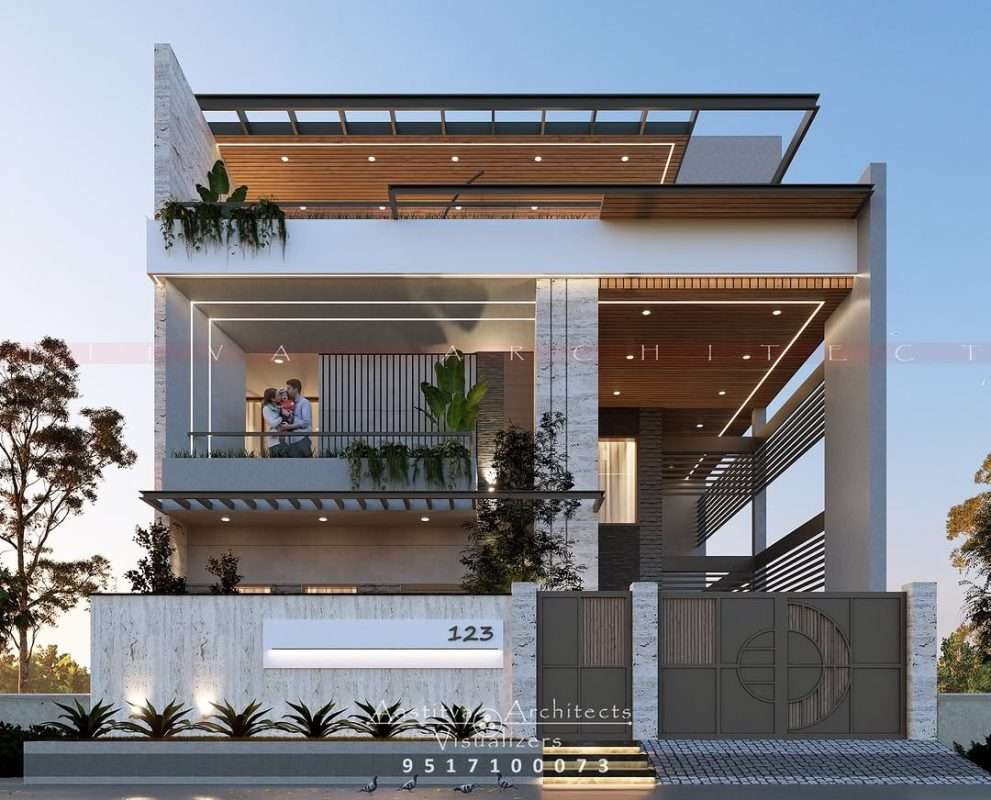
Understanding the psychology behind this data is important — because it helps you make the case internally and to your marketing team.
1. Buyers buy outcomes, not processes
When someone is spending ₹80 lakhs, ₹2 crores, or ₹5 crores on a property, they are not buying walls and a roof. They are buying a lifestyle, a status, a future. A 3D exterior render communicates that outcome — the arrival experience, the facade, the neighbourhood feel — in a way that no floor plan or construction update ever could.
2. Under-construction properties carry emotional risk
In India especially, many buyers have experienced or heard of delayed or abandoned projects. The uncertainty of committing to something that does not yet exist is a real psychological barrier. A photorealistic render reduces that perceived risk. It says: this is exactly what you are getting. It converts a leap of faith into a confident decision.
3. Digital-first buyers expect visual proof
India’s real estate buyer in 2024 has already browsed 12 listings on MagicBricks or 99acres before picking up the phone. They have swiped through Instagram ads. They have watched walkthrough videos on YouTube. This buyer is visually sophisticated and will immediately dismiss listings that look generic or unpolished. A professional 3D render is table stakes for this audience.
4. NRI buyers have no alternative
For buyers in the United States, United Kingdom, Canada, Australia, or the Gulf, a site visit is simply not possible before committing to a purchase. NRI investment in Indian real estate crossed ₹1.5 lakh crore in FY 2023 — and nearly every one of those purchasing decisions was made remotely, based entirely on visual and digital content. For this segment, 3D rendering is not optional. It is the entire sales process.
5 direct ways 3D exterior rendering accelerates your sales cycle
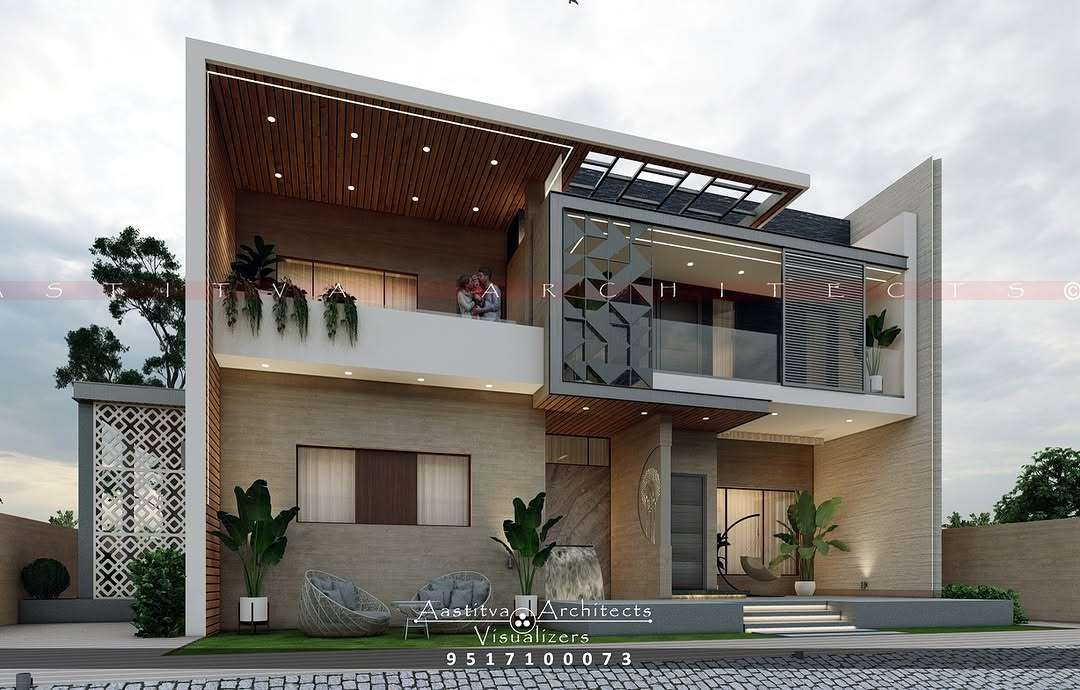
- Eliminates the wait-and-see phase.
In a conventional pre-launch campaign without visuals, a significant percentage of interested buyers take a ‘wait and watch’ position — delaying commitment until they can see the physical structure. Photorealistic renders collapse that waiting period. Buyers can commit with confidence from day one of your launch.
- Replaces your show flat — at a fraction of the cost.
A physical show flat for a residential project in Delhi or Mumbai can cost anywhere from ₹25 lakh to ₹1.5 crore to construct, furnish, and maintain. A complete set of 3D renders — exterior views, interior shots, common areas — typically costs between ₹50,000 and ₹3 lakh, delivers in under two weeks, and can be reused across all marketing channels indefinitely.
- Powers your entire digital marketing campaign.
A single professional 3D exterior render generates multiple marketing assets: a hero image for your website, creative for Instagram and Facebook ads, a banner for property portals, a thumbnail for your YouTube channel, artwork for your emailer, and imagery for your project brochure. One render shoots, dozens of channels benefit.
- Opens the global buyer market.
When a developer in Hyderabad lists a project with professional renders, they are suddenly accessible to buyers in Singapore, Dubai, and New Jersey. Without renders, that project is invisible to the global market. With them, it competes at an international standard.
- Creates urgency through desire.
A render that shows a beautifully lit facade at dusk, a swimming pool catching the last light, or a terrace garden with a city view — this creates desire. Desire creates urgency. Urgency closes deals. No floor plan in the history of real estate has ever made someone rush to the site office.
Which projects benefit most from 3D exterior rendering?
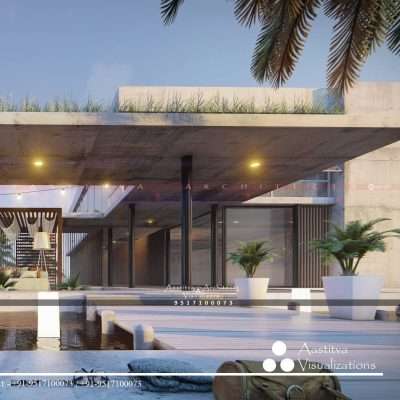
The short answer: any project where the buyer cannot yet see the finished structure. The longer answer:
- Residential apartments and housing societies — pre-launch marketing is entirely dependent on visuals.
- Luxury villas and independent bungalows — high-ticket buyers expect high-quality presentation.
- Commercial complexes and IT parks — B2B buyers and institutional investors require professional renders for board-level approvals.
- Holiday homes and resort developments — lifestyle and emotion drive these purchases more than any other segment.
- Township projects — the scale of the vision requires renders to communicate the master plan.
- NRI-targeted developments — remote buyers have no other way to evaluate a property.
The cost of not using 3D rendering
Developers sometimes ask: can we skip the render and just use site photos and floor plans? Here is the honest calculation.
If a typical residential unit in your project sells at ₹80 lakh, and professional renders cost ₹1.5 lakh for a full set, the render costs 0.18% of a single unit’s value. If the render helps close even one additional unit — or helps you sell units just two weeks earlier — the return on that investment is between 50x and 200x.
The real cost is not the render. The real cost is every day a buyer sits undecided because they cannot visualise what they are buying. It is every inquiry that bounces from your website because the listing imagery looked like it was taken on a 2010 Nokia. It is every NRI buyer who chose a competitor’s project because it looked more credible online.
“The render costs ₹1.5 lakh. The cost of not having it is measured in units unsold, weeks lost, and buyers who went elsewhere.”
What to expect from a professional 3D exterior rendering studio
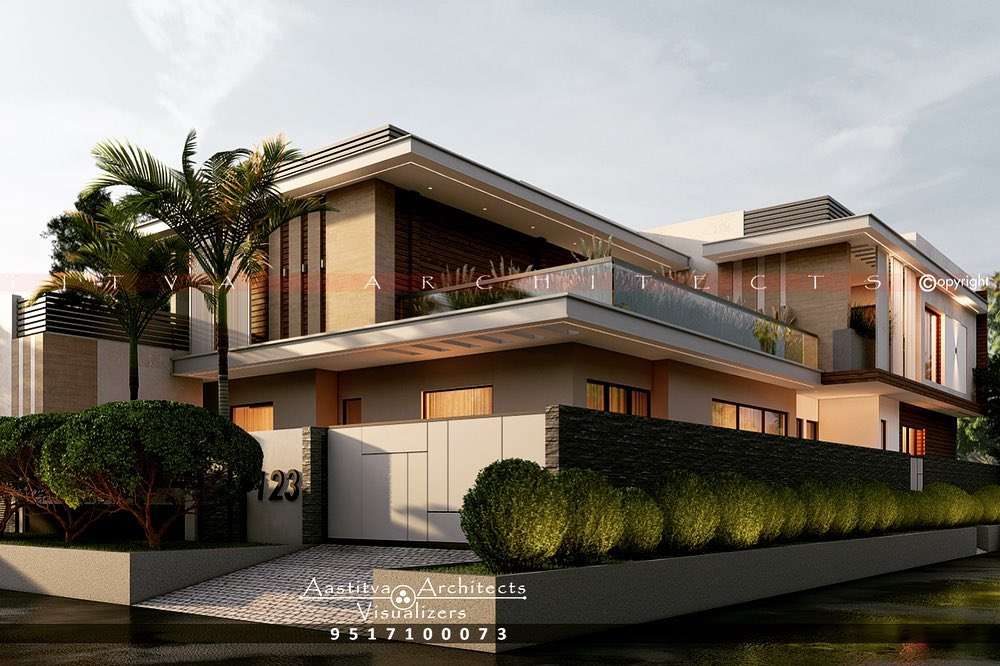
When working with a professional studio — like ours, based in India and serving clients across the country and globally — here is what the process looks like:
- Week 1: You provide architectural drawings, elevation designs, material specifications, and site orientation details.
- Week 1–2: The studio creates the 3D model, applies materials and textures, sets up lighting and environment.
- Week 2: Draft renders are shared for review. You give feedback on materials, lighting, surroundings.
- Week 2–3: Final high-resolution renders are delivered in multiple formats — web-optimised JPEGs, print-ready TIFFs, and portal-ready images.
Most residential exterior render projects deliver in 7 to 14 working days. Rush timelines of 3 to 5 days are available for time-sensitive launches.
Frequently asked questions:
How much does a 3D exterior rendering cost in India?
A single exterior render from a professional studio costs between ₹8,000 and ₹35,000 depending on project complexity, number of elements, and level of detail. A full marketing set — typically 4 to 8 views covering different angles and lighting conditions — ranges from ₹40,000 to ₹2 lakh.
Can renders be made before construction starts?
Yes — this is the most common use case. All that is needed are architectural drawings and design specifications. The render is created entirely in 3D software, so the physical status of the site is irrelevant.
How long does 3D rendering take?
For a standard residential exterior, most studios deliver in 7 to 14 working days from the date they receive complete drawings. Complex projects with detailed landscaping, multiple buildings, or specific time-of-day lighting may take slightly longer.
Can 3D renders be used for RERA compliance materials?
Renders can be used in brochures and marketing materials, subject to RERA guidelines on disclosures — most states require a disclaimer that renderings are artistic impressions. Your legal team can advise on the specific wording required in your state.
Do you serve developers across all of India?
Yes. Our studio works with developers, builders, and real estate companies across Delhi-NCR, Mumbai, Pune, Bangalore, Hyderabad, Chennai, Ahmedabad, and all other major cities — as well as international clients in the UAE, UK, USA, Canada, and Australia.
READY TO GET STARTED? Talk to our team about your project. We offer a free consultation and a sample render review so you can see our quality before committing. Contact us via the form below or WhatsApp us directly.