
contemporary house design
As we navigate the mid-2020s, contemporary house design has transcended being just a style; it has become a philosophy of living. Unlike “modern” design, which refers to a specific mid-century era, contemporary design is ever-evolving, reflecting the “here and now.” For architects and homeowners looking to create a space that is both cutting-edge and deeply functional, this guide outlines the essential pillars of the current movement.
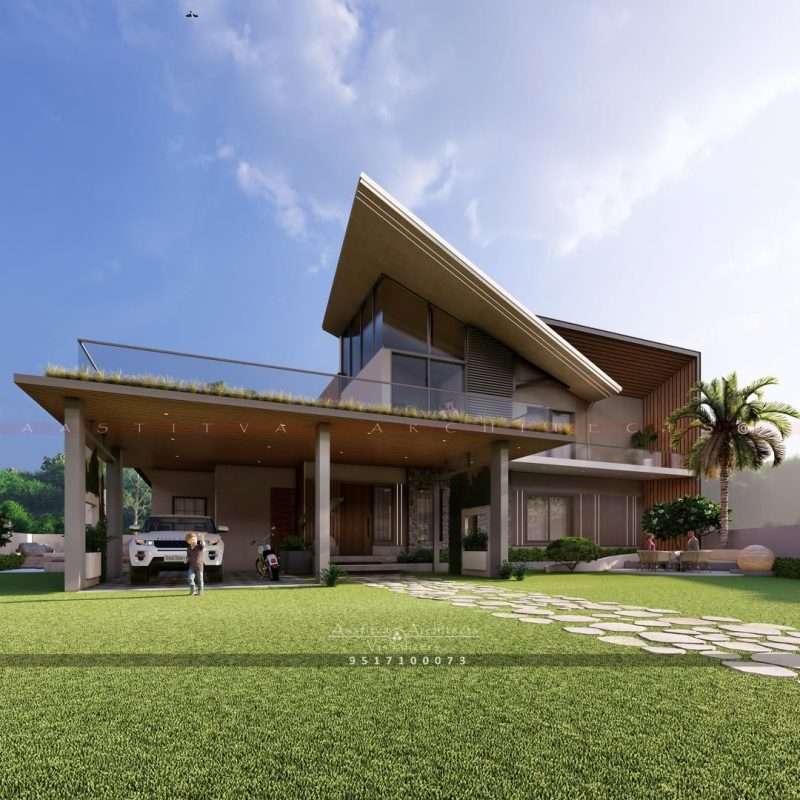
1. Fluid Floor Plans and Indoor-Outdoor Living
A hallmark of contemporary house design is the elimination of rigid, compartmentalized rooms. In 2026, the focus is on “fluidity.” Spaces are designed to serve multiple purposes, often connected by large, sliding glass partitions that physically and visually merge the interior with the landscape. This architectural approach prioritizes natural light and cross-ventilation, which are key components of sustainable architecture.
2. Bold Use of Asymmetry and Volume
Contemporary homes often break away from traditional symmetrical layouts. Designers are increasingly experimenting with:
- Cantilevered Structures: Creating dramatic, overhanging sections that provide shade and a sense of architectural daring.
- Irregular Window Placements: Moving away from standard grids to frame specific views or capture sunlight at different times of the day.
- Mixed Rooflines: Combining flat roofs with steep, single-pitch “shed” roofs for a dynamic silhouette.
3. The High-Tech Material Palette
The choice of facade design materials is what gives a contemporary home its character. Today’s palette is a sophisticated mix of traditional and industrial:
- Exposed Raw Concrete: For a bold, honest aesthetic.
- Recycled Timber: Adding warmth and hitting sustainable architecture goals.
- Smart Glass: Windows that can tint automatically to control heat gain and privacy.
4. Visualizing Complexity: The Architect’s Edge
The irregular shapes and complex light-play of a contemporary house design can be difficult for a client to grasp through 2D blueprints alone. This is where photorealistic architectural rendering becomes an indispensable tool. By using professional exterior rendering services, architects can demonstrate how the shadows will fall across asymmetrical volumes or how specific materials will age over time. This not only builds trust but also allows for design refinements before any ground is broken.
Conclusion: Designing for the Future
A successful contemporary house design is one that feels rooted in its time yet flexible enough for the future. By merging bold architectural forms with the precision of architectural visualization, designers can push the boundaries of what is possible while ensuring the client is aligned with the vision every step of the way.