
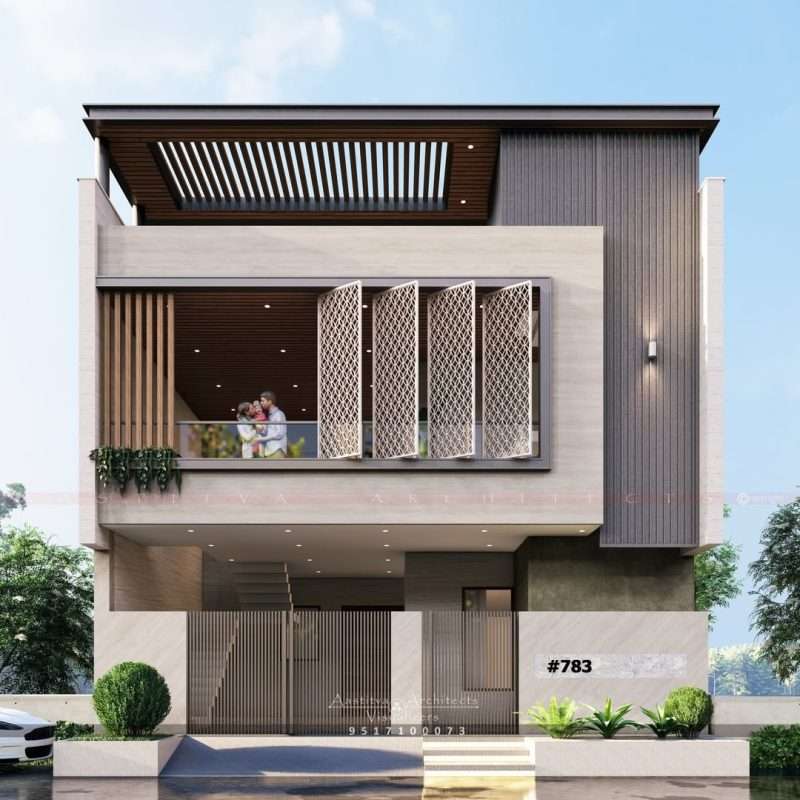
A Project done by Aastitva Architects, book your appointment now +91 9517100073
In the evolving world of residential architecture, the facade of your home is its first handshake with the world. As we move into 2026, the focus has shifted from mere decoration to material honesty—the idea that materials should be chosen for their authentic texture, durability, and architectural purpose. For homeowners planning a modern house elevation design, the choice of facade design materials is the most critical decision in determining the building’s character, longevity, and maintenance requirements.
1. Natural Stone and Stone Veneers: The Timeless Choice
Natural stone remains a staple in front elevation design because of its unparalleled durability and unique textures. In 2026, we are seeing a move toward large-format stone slabs and slim stone veneers that provide a luxury look without the extreme weight of traditional masonry.
- The Look: Provides a grounded, organic feel that ages beautifully.
- The Benefit: Excellent thermal insulation and resistance to the harsh weather conditions often found in Northern India.
2. HPL (High-Pressure Laminates): The Modern Versatile
HPL has revolutionized house elevation design by offering the warm look of wood with a fraction of the maintenance. For those wanting a contemporary house design, HPL panels are a go-to for adding accents to balconies or porch ceilings.
- The Look: Mimics high-end wood grains or matte architectural finishes.
- The Benefit: It is UV-resistant, weather-proof, and extremely easy to clean, making it ideal for the dusty environments of urban Punjab and NCR.
3. Metal Fins and Louvers: The Architectural Statement
One of the most trending facade design materials in 2026 is the use of metal fins (often aluminum or steel). These are used to create “jali” effects or vertical patterns that provide privacy while allowing natural light and ventilation to pass through.
- The Look: Sharp, industrial, and highly sophisticated.
- The Benefit: Metal fins can be used to hide service areas or provide shade to large glass windows, significantly reducing the heat load on the building.
4. Testing Your Material Palette with Visualization
The biggest risk in choosing facade materials is that a small sample in a showroom can look very different when applied across a three-story building. This is why photorealistic rendering services are essential.
- Digital Material Swapping: Using architectural visualization, we can show you exactly how your home looks with stone versus HPL before you place a single order.
- Lighting Simulation: See how your chosen textures react to natural sunlight at different times of the day, ensuring your front elevation design looks stunning from dawn to dusk.
5. Why Choose Aastitva Architects?
At Aastitva Architects, we pride ourselves on our deep understanding of residential architecture and material performance. We don’t just pick materials based on trends; we pick them based on the specific climate of your site and your lifestyle. Our team uses world-class photorealistic architectural rendering to provide you with a “digital twin” of your home, ensuring that your material palette is perfectly balanced and technically sound.
Conclusion: Build a Facade That Lasts
Your home’s exterior is an investment in your property’s value and your personal legacy. By choosing the right facade design materials and verifying your vision through professional visualization, you can ensure your home remains a landmark in your neighborhood for years to come.